
By 2009 I’d moved into work with a clearer name than anything I’d done before: helping government, industry, and academia actually collaborate, using collaborative innovation network principles, on programmes that ran across South America, the Middle East, and eventually back home to Australasia.
The pattern from the previous decade hadn’t gone anywhere. It had just found a bigger stage.
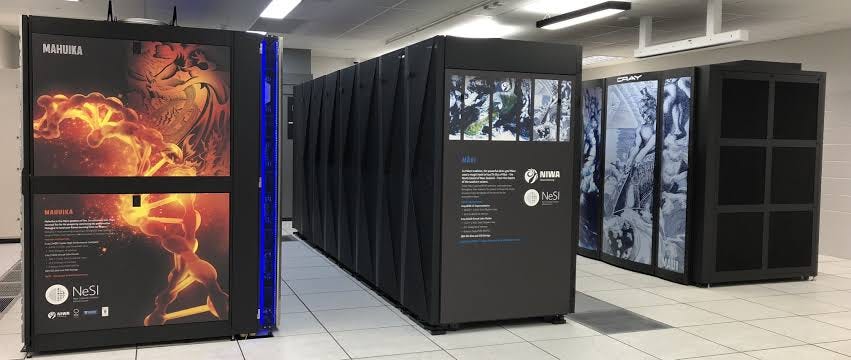
The engagement that mattered most from this period was a redesign of New Zealand’s national e-Science infrastructure (NeSI), the shared compute, storage, and research-support capability connecting universities, research institutions, and government across the country.
NeSI wasn’t broken in any way you could point to on a systems diagram. The compute worked. The storage worked. What didn’t work was harder to name: it operated as a federation of technical platforms, each institution’s piece governed on its own terms, with no coherent answer to the question a researcher actually asks, which is simply who do I go to, and what can I expect from them.
That question turned out to be the whole design problem!
Every institution in the federation had its own priorities, and its own sense of what NeSI was for. Nobody had designed the thing a user actually experiences, a consistent, accountable, end-to-end service, because everyone had been designing their own piece of the infrastructure instead. The technical redesign, when it came, was almost secondary. The real redesign question was how to govern and operate NeSI as one coherent national service for all researchers, with clear ownership of outcomes, rather than as a collection of platforms that happened to share a name.

I’d spent a decade by then noticing that governance problems wore technical costumes. NeSI was the first time I got to actually design the alternative, at national scale, rather than just diagnose the pattern after the fact. I stopped thinking about it as an infrastructure project and started thinking about it as a service, something with an owner, a defined handoff to the people using it, and an expectation that it would keep improving in successive, deliberate versions rather than being built once and left to decay.
None of that vocabulary was original to me.
Service design and IT service management had been saying versions of this for years. What was new, for me, was applying it to something as institutionally tangled as a multi-university national infrastructure, where no single actor had the authority to simply declare the redesign and make it so.
That’s the part of NeSI I keep coming back to. Getting the service design right was, in the end, the easier half of the problem. The harder half was governance in the literal sense, who had standing to decide what, across institutions that didn’t report to each other and never would.

Provan and Kenis’s work on network governance modes, a few years later, gave me a cleaner way to describe what I’d been improvising: that networks without a single controlling authority still need some form of coordinating structure, and the choice of which form is itself a design decision, not something that emerges naturally if you just get enough good people in a room. I’d built one version of that structure for NeSI without knowing there was a literature already describing the choice I was making.
Reference: Provan, K.G. & Kenis, P. (2008). "Modes of Network Governance: Structure, Management, and Effectiveness." Journal of Public Administration Research and Theory.
Yup, and the really interesting thing is that if the right authority is not put in place at the beginning, AI just makes the whole go sideways faster, ergo, AI workflow Slop!
Perfect, Malcolm. And we’re here again with agentic workflow, decision, and interactions. Governance and assurance for all risk and value owners is a key unblocker.