
The second stretch of my career started with a decision to build capability rather than software. Stepping away from my multinational consulting career, I established a start-up learning company focused on helping software firms grow and understanding how software industries actually contribute to local economic development, not the pitch-deck version of that story, the real one, with all its false starts.

Over the better part of a decade, we delivered workshops in more than thirty countries across West and Eastern Europe, the Middle East, South America and the Asia Pacific, most of it through Microsoft Innovation Centres, which were never really technology projects at all.
They were collaborative arrangements between universities, city governments, and local industry, three institutions with three different mandates, three different funding cycles, and three different ideas about what success would look like, all expected to pull in the same direction because someone had put their names on the same MOU.
This was my first systematic encounter with multi-stakeholder governance, and it arrived as a practical problem long before it arrived as a concept.
Which decisions actually needed collective authority, and which just needed one institution to get out of the way?
Who held that authority when the answer wasn’t written down anywhere?
How was it supposed to work when a university operated on a semester’s patience, a city government on an election cycle’s, and a software company on whatever the market gave it that quarter?
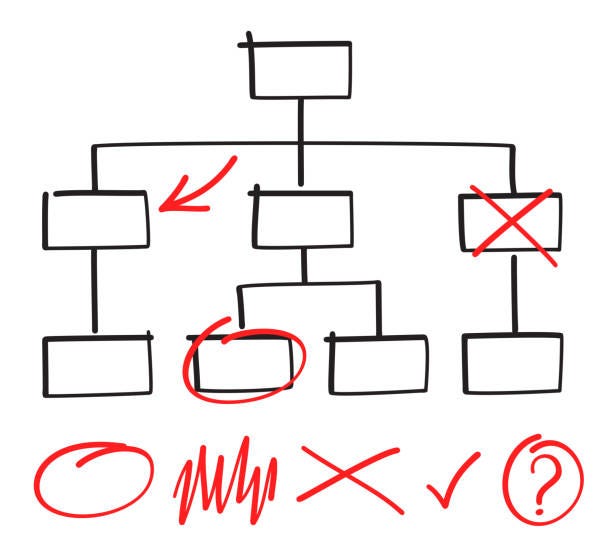
I didn’t have good answers. What I had was a growing, uncomfortable sense that the org chart each institution walked in with told me almost nothing about how decisions would actually get made once the project was underway.
Out of that period came a piece of research I’m still, in a strange way, extending today: the notion of innovation as a messy undertakening in a local context, arrived at through a rich sedimented history of accidents, chaos and change, which I tested alongside a three-ecosystem model mapping the relationships between demand, supply, and innovation actors.
It sounds dry written down like that. What it actually taught me was a habit I’ve never lost, that capability isn’t something you design once and walk away from. It accumulates, or fails to, across repeated cycles of measurement, intervention, and whatever institutional memory survives from one version of the effort to the next. You don’t get it right the first time. You get a version, learn from what the version revealed, and release the next one.
The bigger shift, though, came from reading Duncan Watts alongside the doctrine I’d already absorbed from my Army Reserve years. Watts’s work on networks argued something that ran directly against how most institutions still described themselves: that relational, distributed structures were often more robust and more adaptable than hierarchical ones, not despite having less central control, but because of it.
Watching those thirty-country engagements up close, I could see it playing out in real time. The productive local software economies were never the ones with the cleanest governance chart.
They were the ones where the relationships between the university, the city, and the industry actually worked, where information moved, trust existed, and nobody was waiting for permission that had to travel through three institutions to arrive.

That was the first time I understood authority as something constituted between people and institutions, continuously, rather than something granted once and then simply held. It’s a small enough reframe to state in a sentence. It took me the better part of a decade, on the ground in thirty countries, to actually believe it.
The academic grounding came later, as it usually did for me. Watts and Strogatz’s 1998 paper on small-world networks gave the formal language for something I’d been watching operate informally for years, that the quality and structure of connections between actors matters more than any single actor’s position in a nominal hierarchy.
I keep finding this same order of operations in my own history: watch the pattern first, meet the academic/research paper that names it second!!
References:
Watts, D.J. & Strogatz, S.H. (1998). "Collective dynamics of 'small-world' networks." Nature.
Great insight, Malcolm.